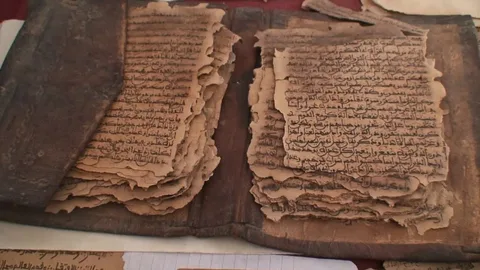
25 Secrets of ancient manuscripts.
Ancient manuscripts are not just relics of the past; they are treasures filled with secrets that continue to intrigue researchers and historians alike. Here are some of the most fascinating secrets uncovered in these mysterious texts:
- Hidden Text of Euripides.
- A hidden text of a fifth-century-BC Greek drama was discovered beneath a 13th-century-AD prophetic book, revealing works attributed to the famous dramatist Euripides.
- Treatise of the Vessels.
- This ancient Hebrew text discusses the treasures of King Solomon, including the legendary Ark of the Covenant, suggesting that these treasures were hidden in various locations.
- Codex Selden.
- This precolonial Mexican manuscript, lost for nearly 500 years, was found to contain hidden texts and images, which are still being analyzed.
- Novgorod Codex.
- Discovered in Russia, this 11th-century book contains multiple layers of hidden texts, including previously unknown Slavonic compositions.
- Codex Zacynthius.
- This manuscript contains a hidden text from the sixth or seventh century, which includes an account of the Gospel of Luke.
- The Lost Gospel.
- A 1500-year-old manuscript suggests that Jesus may have had a romantic relationship with Mary Magdalene, challenging traditional views of his life.
- Voynich Manuscript.
- This enigmatic manuscript, written in an unknown script, has baffled cryptographers and historians for centuries, with theories ranging from it being a hoax to a genuine unknown language.
- Sibiu Manuscript.
- Dating back to 1570, this manuscript contains technical data about multi-stage rockets and artillery, suggesting advanced knowledge of ballistics in the 16th century.
- Black Book of Carmarthen.
- The oldest surviving Welsh manuscript, it contains hidden annotations and drawings that were revealed through advanced imaging techniques.
- Codex Washingtonianus.
- This ancient Bible, over 1,500 years old, contains a unique passage that raises questions about the nature of good and evil, not found in any other manuscript.
- The Use of Modern Technology.
- Techniques such as X-rays, CT scans, and multispectral imaging are crucial for uncovering hidden texts and images in ancient manuscripts.
- Palimpsests.
- Many ancient manuscripts are palimpsests, where earlier texts were scraped off to make way for new writings, often leaving traces of the original content.
- Cryptographic Techniques.
- Some manuscripts, like those attributed to Roger Bacon, employed complex cryptographic methods to conceal their messages, requiring advanced techniques for deciphering.
- Cultural Insights.
- Ancient manuscripts often reflect the cultural and societal norms of their time, providing insights into the beliefs and practices of ancient civilizations.
- Language Evolution.
- The study of ancient manuscripts reveals how languages have evolved over time, with many texts showcasing changes in vocabulary, grammar, and syntax.
- Religious Texts.
- Many ancient manuscripts are religious texts that have shaped the beliefs and practices of various faiths, including Christianity, Judaism, and Islam.
- Historical Events.
- Manuscripts often document significant historical events, providing firsthand accounts that can alter our understanding of history.
- Artistic Expression.
- The illustrations and calligraphy in ancient manuscripts are often works of art in their own right, showcasing the skill and creativity of their creators.
- Preservation Challenges.
- The preservation of ancient manuscripts is a significant challenge, with many texts deteriorating over time due to environmental factors.
- Manuscript Theft.
- Throughout history, many ancient manuscripts have been stolen or lost, leading to a significant gap in our understanding of certain historical periods.
- Cultural Exchange.
- Manuscripts often reflect the cultural exchange between different civilizations, showcasing the influence of trade and conquest on language and literature.
- Women in Manuscript Production.
- Women played a crucial role in the production and preservation of manuscripts, often working as scribes and illustrators.
- Manuscripts as Status Symbols.
- In many cultures, owning manuscripts was a symbol of wealth and status, leading to the creation of lavishly decorated texts.
- The Role of Monasteries.
- Monasteries were key centers for the production and preservation of manuscripts during the Middle Ages, often serving as libraries and scriptoriums.
- Manuscripts and Education.
- Ancient manuscripts were often used as educational tools, teaching subjects ranging from philosophy to science.
These secrets not only highlight the importance of ancient manuscripts in understanding our past but also demonstrate the ongoing efforts to uncover the mysteries they hold. As technology advances, we can expect to learn even more from these fascinating texts.