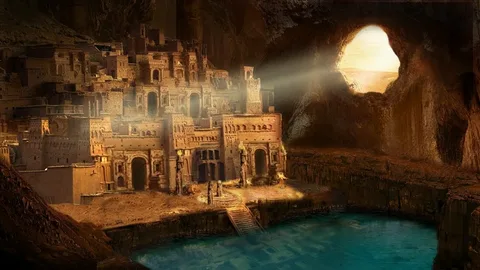
50 Secrets of ancient cities.
50 Secrets of Ancient Cities
The ruins of ancient cities are more than just piles of stone. They are time capsules, whispering stories of innovation, power, and the daily lives of people who lived thousands of years ago. Beneath the well-trodden tourist paths lie countless secrets, from hidden engineering marvels to forgotten rituals.
- Hidden Aqueducts: Many Roman cities had secondary, "shadow" aqueducts that were kept secret to ensure a water supply if the main one was sabotaged during a siege.
- The Sound of Ephesus: The Great Theatre in Ephesus was so acoustically perfect that a whisper on stage could be heard in the top row, a secret of ancient Greek engineering.
- Pompeii's Fast Food: The city was filled with thermopolia, ancient fast-food stalls with counters containing deep terracotta jars for keeping food warm.
- Mohenjo-daro's Plumbing: This Indus Valley city had a sophisticated, city-wide sewage system with covered drains running under the streets, a marvel not seen again for millennia.
- The Secret of Roman Concrete: Their concrete actually gets stronger over time due to a rare crystal called Tobermorite forming within it, a secret modern scientists are still trying to fully replicate.
- Petra's Water Mastery: The Nabateans who built Petra were masters of hydraulics, creating a complex system of dams, cisterns, and channels to capture every drop of rain in the desert.
- The Curse of the Pharaohs' Cities: Workers' villages like Deir el-Medina in Egypt had their own legal and medical systems, and records show they even went on strike for unpaid wages.
- Troy's Layers: The legendary city of Troy was not one city but nine, built one on top of the other over 4,000 years.
- Angkor Wat's Cosmic Map: The entire city of Angkor was designed as a microcosm of the Hindu universe, with temples representing Mount Meru, the center of the cosmos.
- The Lost Library of Alexandria's Legacy: While the great library was destroyed, its "daughter" library at the Serapeum may have survived for centuries longer, holding secret scrolls.
- Chichen Itza's Serpent: During the spring and autumn equinoxes, the sun casts a shadow on the Kukulkan pyramid that looks like a serpent slithering down the steps.
- The Secret Tunnels of Cappadocia: The underground cities of Derinkuyu and Kaymakli in Turkey extend hundreds of feet below ground and could house tens of thousands of people, complete with ventilation shafts and wineries.
- Machu Picchu's Astronomical Clock: The Intihuatana stone is a precise astronomical clock or calendar used by the Incas to track the sun's position.
- Babylon's Hanging Gardens Mystery: They may have been located not in Babylon, but in the Assyrian city of Nineveh, according to some historians.
- The Secret Symbols of Teotihuacan: The city's layout is aligned to mimic the solar system, with the Pyramid of the Sun and Moon representing celestial bodies.
- Knossos's Running Water: The Minoan palace in Crete had flushing toilets and a complex drainage system over 3,500 years ago.
- Great Zimbabwe's Wealth: The city was a major trading hub for gold and ivory, its wealth built on controlling trade routes to the Indian Ocean coast.
- The Secret Plague Pits of London (Roman): A Roman burial site in London contains the remains of citizens who died during the Antonine Plague, offering a glimpse into a city in crisis.
- Cahokia's Woodhenge: Near modern-day St. Louis, this Native American city had a giant circle of wooden posts used as a solar calendar, similar to Stonehenge.
- Palmyra's Queen Zenobia: This desert city's queen led a famous revolt against the Roman Empire, carving out a short-lived empire of her own.
- The Secret Colors of Persepolis: The magnificent palaces were not plain stone; they were painted in bright blues, reds, and golds that have faded over time.
- Amarna's Heresy: The city was built by Pharaoh Akhenaten for his new religion, worshipping only one god, the Aten, and was abandoned and cursed after his death.
- The Secret Sewer Goddess: In Rome, the sewer system (the Cloaca Maxima) was so important it had its own patron goddess, Cloacina.
- Tikal's Defensive Walls: Recent LIDAR scans revealed that the Mayan city of Tikal was fortified with long defensive walls stretching for miles.
- The Secret of Greek White Marble: The famous white marble was often painted in bright, gaudy colors that have worn away, leaving us with the mistaken idea of "pure" white statues.
- Carthage's Infant Cemeteries (Tophets): These were secret sacred spaces for child sacrifice according to Roman propaganda, though modern archaeology suggests they were likely for the burial of stillborns and young children who died of natural causes.
- The Secret Language of Quipu: The Inca city administrators used quipu, complex knotted strings, as a secret three-dimensional writing system to keep records.
- Mohenjo-daro's "Great Bath": This massive public pool was likely used for ritual purification and is one of the earliest examples of a public water tank in the ancient world.
- The Secret Grain Mills of Ostia Antica: The port city of Rome had massive grain mills powered by donkeys walking in circles to feed the capital.
- The Secret of Damascus Steel: The legendary swords from this city's forges contained carbon nanotubes, making them incredibly strong and sharp—a secret lost for centuries.
- Jericho's Tower: The world's oldest known stone tower, built over 11,000 years ago, predates even the invention of pottery or metal tools.
- The Secret Mummies of Palenque: The Mayan city-state's rulers were buried in stunningly beautiful tombs deep within their pyramids.
- The Secret Hippodrome Curse Tablets: In Roman cities like Antioch, people would write curses on lead tablets and bury them at the starting gates of chariot races to jinx their opponents.
- Tiwanaku's Sun Gate: This intricately carved stone monolith in Bolivia is believed to be a complex solar calendar.
- The Secret Gladiator Barracks (Ludus Magnus): Hidden beneath the streets of Rome are the well-preserved ruins of the main gladiator training school.
- Mesa Verde's Cliff Secrets: The Ancestral Puebloans built their cities into cliff alcoves for defense and to protect from the harsh climate.
- The Secret Dyes of Tyre: This Phoenician city held a monopoly on the production of purple dye, made from sea snails; it was so expensive it became the color of royalty.
- The Secret Heating System (Hypocaust): Roman villas had an advanced underfloor heating system where hot air from a furnace circulated beneath the floors and up walls.
- Nineveh's Library Discovery: The library of King Ashurbanipal was discovered by archaeologists in the 1850s, revealing over 30,000 clay tablets including the Epic of Gilgamesh.
- The Secret Acoustics of Stonehenge: Some researchers believe Stonehenge functioned as a giant musical instrument or "lithophone," with the stones producing different tones when struck.
- The Secret Slums of Rome (Subura): While the Palatine Hill housed the rich elite, the valley between it and the Esquiline Hill was a dangerous slum filled with tenement blocks (insulae).
- Copan's Hieroglyphic Stairway: This Mayan city has the longest known Mayan text inscription in the world, containing its dynastic history.
- The Secret Water Clocks (Clepsydra): Ancient Greek cities like Athens used sophisticated water clocks to time speeches in their courts and assemblies.
- Great Zimbabwe's Conical Tower: The purpose of this massive, solid tower remains a secret; it has no entrance or internal rooms.
- The Secret Mithraeums: In many Roman cities, followers of the mystery cult of Mithras worshipped in hidden underground temples called mithraeums.
- Easter Island's "Walking" Moai: Experiments have shown that the giant statues could have been "walked" into place using ropes and a rocking motion, rather than being rolled on logs.
- The Secret Drainage of Harappa: Like Mohenjo-daro, this Indus Valley city had meticulously planned streets with drains for every house.
- Leptis Magna's Market Curfew Bell: This Roman city in Libya had a market building with a bell tower that would ring to signal the official closing time for trade.
- The Secret Honeycombs of Derinkuyu: The underground city's ventilation shafts also doubled as wells for water access on different levels.
- Göbekli Tepe's Age: This site in Turkey is considered the world's first temple, built by hunter-gatherers over 11,500 years ago—before the invention of cities or agriculture—challenging our entire understanding of how civilization began.