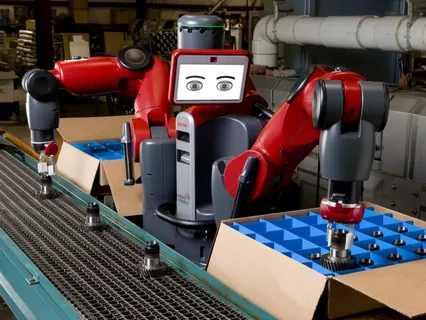
How modern robots work.
How Modern Robots Work
Modern robots are a fusion of advanced hardware, sophisticated software, and artificial intelligence. They are designed to perform tasks that range from simple repetitive actions to complex decision-making in dynamic environments. The inner workings of a modern robot can be broken down into several key components and processes.
▌ 1. Sensing and Perception
Robots are equipped with a variety of sensors that allow them to perceive their surroundings. These include:
- Cameras and vision systems for recognizing objects, people, and obstacles.
- LIDAR and ultrasonic sensors for mapping environments and measuring distances.
- Touch and force sensors for delicate manipulation and safety.
- Microphones for voice recognition and environmental awareness.
The data from these sensors is processed in real time, enabling the robot to build a model of its environment and react accordingly.
▌ 2. Control Systems
At the heart of every robot is a control system—usually a powerful onboard computer or microcontroller. This system interprets sensor data, runs algorithms, and sends commands to the robot’s actuators (motors, servos, hydraulics). Modern robots often use embedded systems or even cloud-based computing for more intensive tasks.
▌ 3. Actuation and Mobility
Actuators are the “muscles” of the robot, converting electrical signals into physical movement. Depending on the robot’s purpose, it may have:
- Wheels or tracks for ground mobility.
- Legs for walking or climbing.
- Arms and grippers for manipulation.
- Propellers or thrusters for aerial or underwater operation.
Advanced robots use a combination of these for versatile movement.
▌ 4. Artificial Intelligence and Learning
Modern robots are increasingly autonomous, thanks to AI and machine learning. They can:
- Recognize patterns and objects using neural networks.
- Navigate complex spaces using simultaneous localization and mapping (SLAM).
- Learn from experience, improving their performance over time.
- Interact with humans through natural language processing and gesture recognition.
▌ 5. Communication and Networking
Many robots are part of the Internet of Things (IoT), allowing them to share data with other devices, receive updates, and be controlled remotely. In industrial settings, robots work in fleets, coordinating tasks through wireless networks.
▌ 6. Power Supply
Robots are powered by batteries, fuel cells, or direct electrical connections. Energy efficiency is a major focus, especially for mobile and autonomous systems.
▌ Applications
Modern robots are found in factories, hospitals, homes, and even space. They assemble products, assist in surgeries, clean homes, explore other planets, and much more. As technology advances, robots are becoming more adaptable, safer, and capable of working alongside humans in collaborative environments.
In short, modern robots work by sensing their environment, processing information with AI, making decisions, and acting on those decisions—all in real time and often with minimal human intervention.