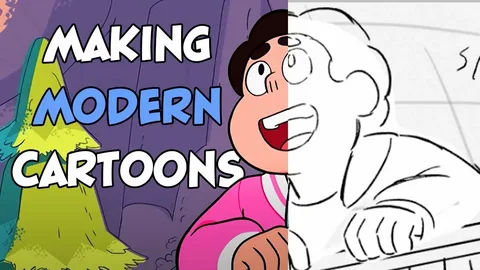
How movies and cartoons are made.
▌ 1. Development of the Idea
- The process begins with an idea or concept. This can be an original story, an adaptation of a book, or a new take on a classic tale.
- Brainstorming sessions are held to refine the concept and determine the target audience.
▌ 2. Scriptwriting
- A screenplay is written, outlining the dialogue, actions, and scenes. This document serves as the blueprint for the entire production.
- The script is often revised multiple times based on feedback from producers and directors.
▌ 3. Pre-Production
- Storyboarding: Visual representations of the script are created, showing key scenes and actions. This helps in planning the flow of the story.
- Character Design: Artists create designs for characters, including their appearance, clothing, and expressions.
- World Design: The environment and settings are designed, including backgrounds and props.
- Casting: For live-action films, actors are cast for the roles. In animation, voice actors are selected to bring characters to life.
▌ 4. Production
- Animation:
- For 2D animation, artists draw each frame by hand or using computer software.
- For 3D animation, characters and environments are modeled in a 3D space, and animators create movement by manipulating these models.
- Stop Motion: This technique involves photographing physical objects or puppets in small increments to create the illusion of movement.
- Live-Action Filming: Scenes are shot according to the script, with actors performing their roles. Multiple takes may be recorded to capture the best performances.
▌ 5. Sound Design
- Sound effects, music, and dialogue are recorded and added to the film. This includes:
- Voice Acting: For animated films, voice actors record their lines in a studio.
- Sound Effects: Foley artists create sounds that match the actions on screen (e.g., footsteps, doors closing).
- Music Composition: A score is composed to enhance the emotional impact of the film.
▌ 6. Post-Production
- Editing: The film is edited to create a coherent narrative. This includes cutting scenes, adjusting pacing, and ensuring continuity.
- Visual Effects (VFX): Special effects are added to enhance the visuals, such as CGI elements or compositing.
- Color Correction: The color of the film is adjusted to ensure a consistent look and feel.
- Final Mix: The final sound mix is created, balancing dialogue, sound effects, and music.
▌ 7. Distribution
- Once the film is complete, it is prepared for distribution. This can include:
- Film Festivals: Showcasing the film at festivals to gain exposure.
- Theatrical Release: Distributing the film to cinemas.
- Streaming Platforms: Releasing the film on platforms like Netflix, Disney+, or YouTube.
▌ Key Points
- The entire process can take several years, especially for animated films, which require meticulous attention to detail.
- Collaboration among various departments—writing, art, animation, sound, and editing—is crucial for a successful production.
- Advances in technology have transformed animation and filmmaking, allowing for more complex and visually stunning stories.